The Reindeer Carries the Story
Reindeer husbandry is one of the most central aspects of Sámi culture, a tradition that stretches far back in time. The Sami have relied on the reindeer for food, warmth, and materials for everything from everyday objects to art and jewellery.
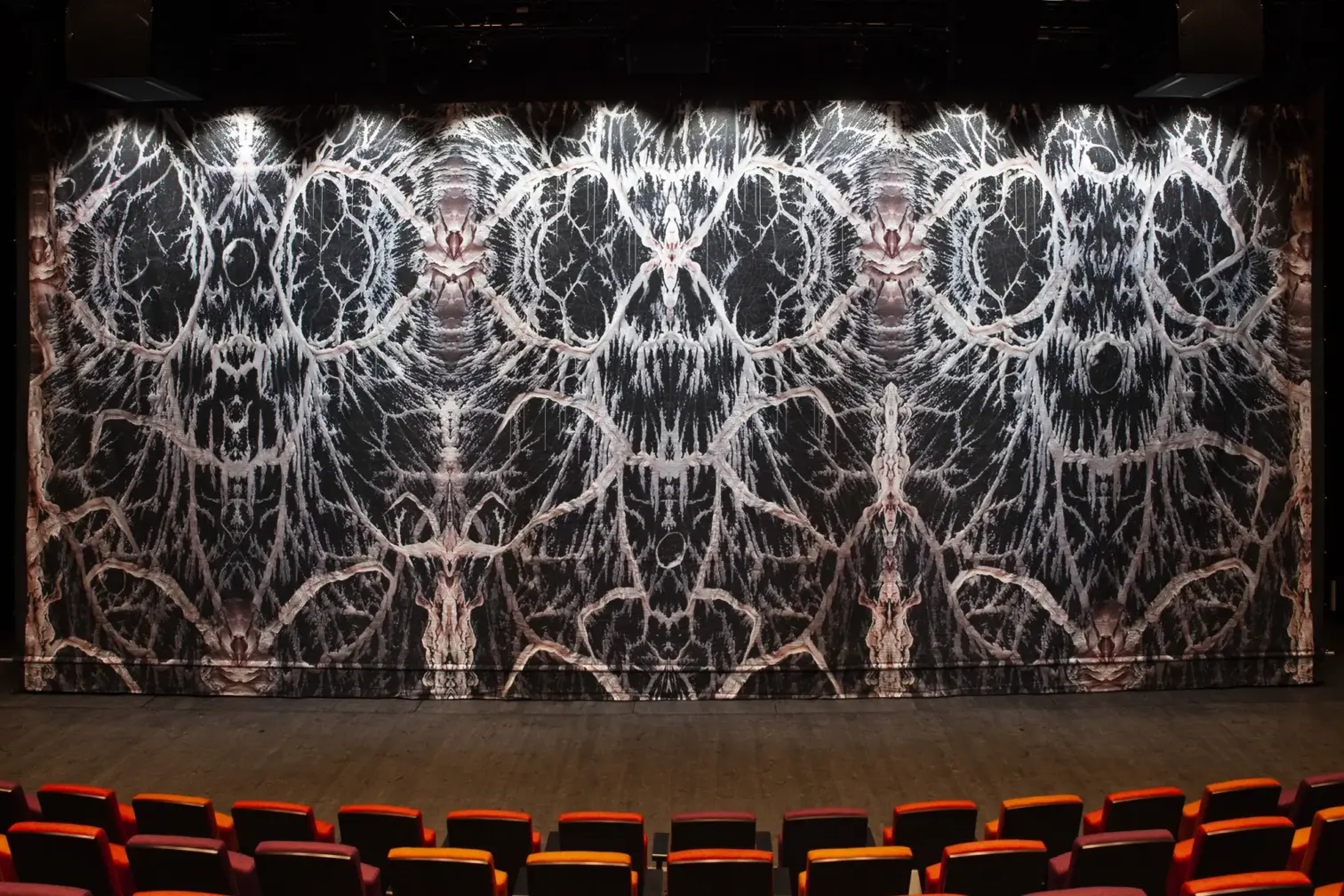
The reindeer also plays a central role in Máret Ánne Sara’s work, which she chose to name Gapmu - the Sámi word for “gut feeling.” Having grown up in a reindeer-herding family in Kautokeino, she is an established artist known for her political engagement and distinctive style. Her inspiration came from the fat membrane of a reindeer. Through digital processing, the pattern was enlarged, and within the image, one can discern the contours of a spiritual figure from Sami mythology.
Monica Milch Gebhardt describes the piece as an embodiment of the curtain, a tribute to Sámi knowledge and the deeply rooted relationship between humans and nature.
Material Choices and Technical Challenges
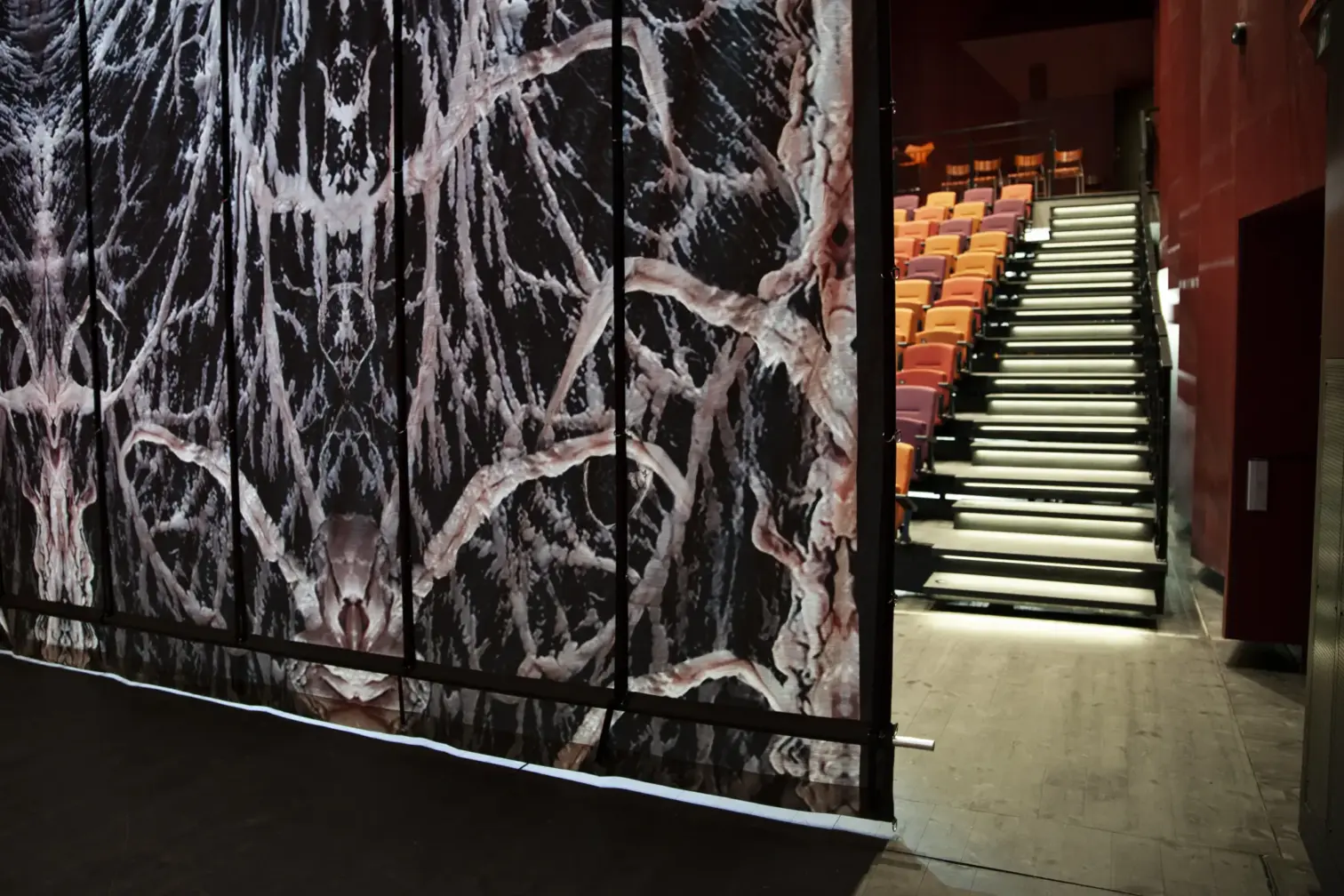
While the initial idea was a traditional side-hung curtain, the process led to a shift toward a lifting mechanism for greater flexibility. Big Image developed sketches, built prototypes, and tested various materials before deciding on cotton. A trusted material in theater, cotton offered a natural drape that enhanced the curtain’s movement while also allowing it to be printed in a single, seamless piece
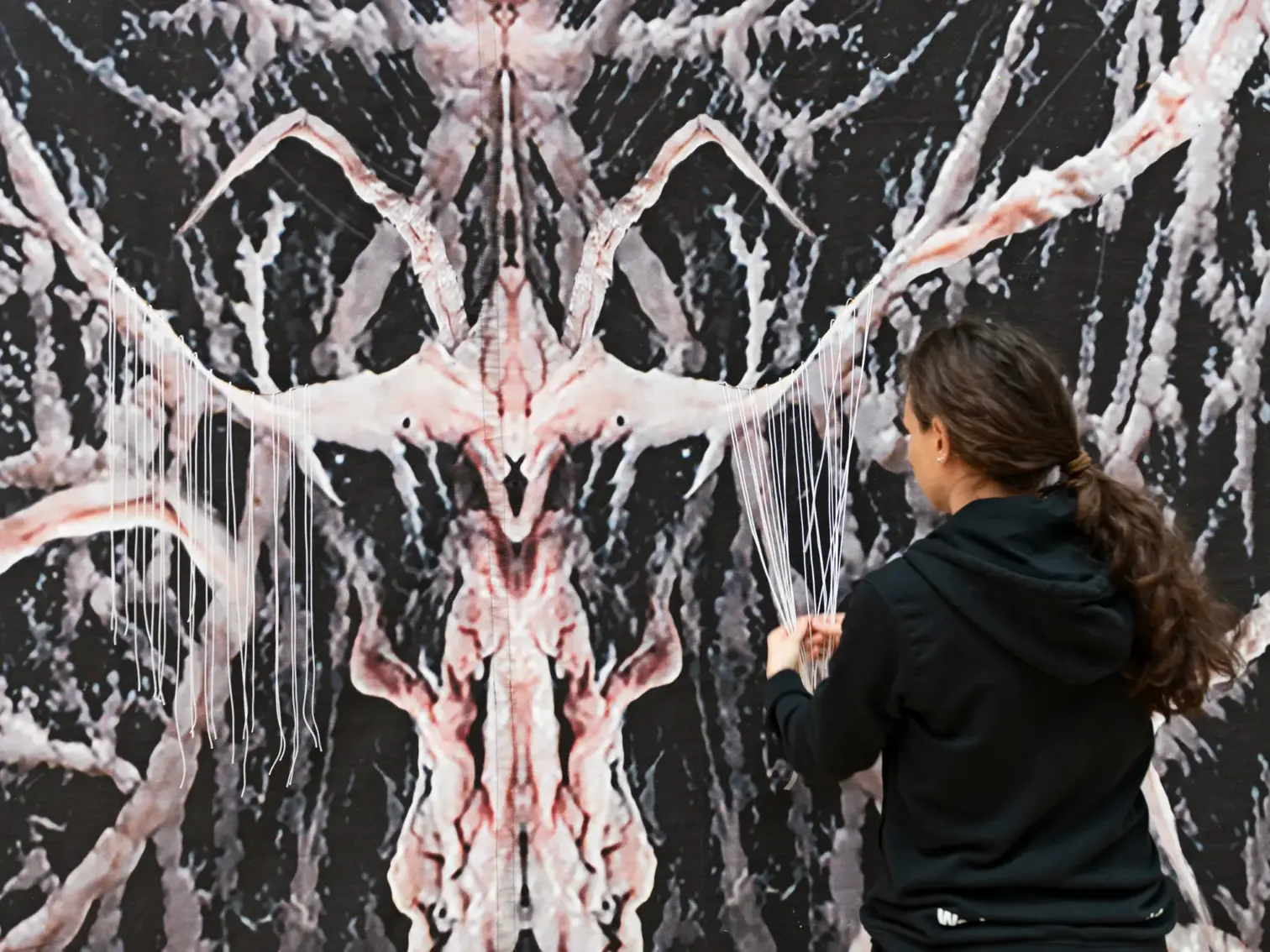
During an on-site visit, the artist felt something was missing. To add more depth to the design, she incorporated fringes into the artwork, which she then sewed by hand—an homage to the duodji tradition, the Sámi word for artistic craftsmanship.
The visit proved crucial - not just for finalizing the design, but for ensuring the artwork truly resonated with the soul of the space and its cultural heritage. It allowed for testing the curtain’s lighting and making the last color adjustments to achieve the right feeling and ensure the piece was harmonized with the building. The final result is more than just a curtain - it is a living tribute to Sámi tradition, carrying the weight of history, craftsmanship, and cultural identity onto the stage.